
Water around a water heater is one of the most common calls we get, and the first question is always the same: where is it actually coming from? Water runs downhill and pools at the lowest point, so the puddle is often nowhere near the source. It might be the temperature and pressure relief valve or its discharge line, the drain valve near the bottom of the tank, the hot and cold connections on top, condensation on a cold tank, or a nearby pipe that has nothing to do with the heater. It might also be the tank itself, and that answer changes everything. In Grand Prairie, TX, we start every leak call by finding the true source.
Our diagnosis is methodical. We dry the area, check the relief valve outlet and discharge pipe, inspect the drain valve, and follow the hot and cold lines up to the fittings on top of the tank. On gas units, we check the combustion chamber for water, which can point to condensation or, more seriously, a failing tank. If the relief valve has been discharging, we put a gauge on the system to read static pressure and check for thermal expansion, since a closed plumbing system without an expansion tank can push pressure high enough to open the valve. Only then do we recommend a fix.
Once we know the source, the repair is usually straightforward. A new T&P valve, a brass drain valve in place of a weeping plastic one, fresh dielectric fittings or supply connectors, and an expansion tank or pressure-reducing valve when pressure is the cause can all be handled on the spot. A corroded tank is different. Nothing will reliably seal a rusted tank, so we explain replacement honestly and walk through the choices. Before we leave, we can add a drain pan with a drain line and a leak sensor, which matters most for heaters above finished space. Call (972) 975-6313 for leak repair in Grand Prairie.
Most of our service calls are for Water Heater Repair in Grand Prairie and Water Heater Replacement in Grand Prairie. Either is a good place to start.
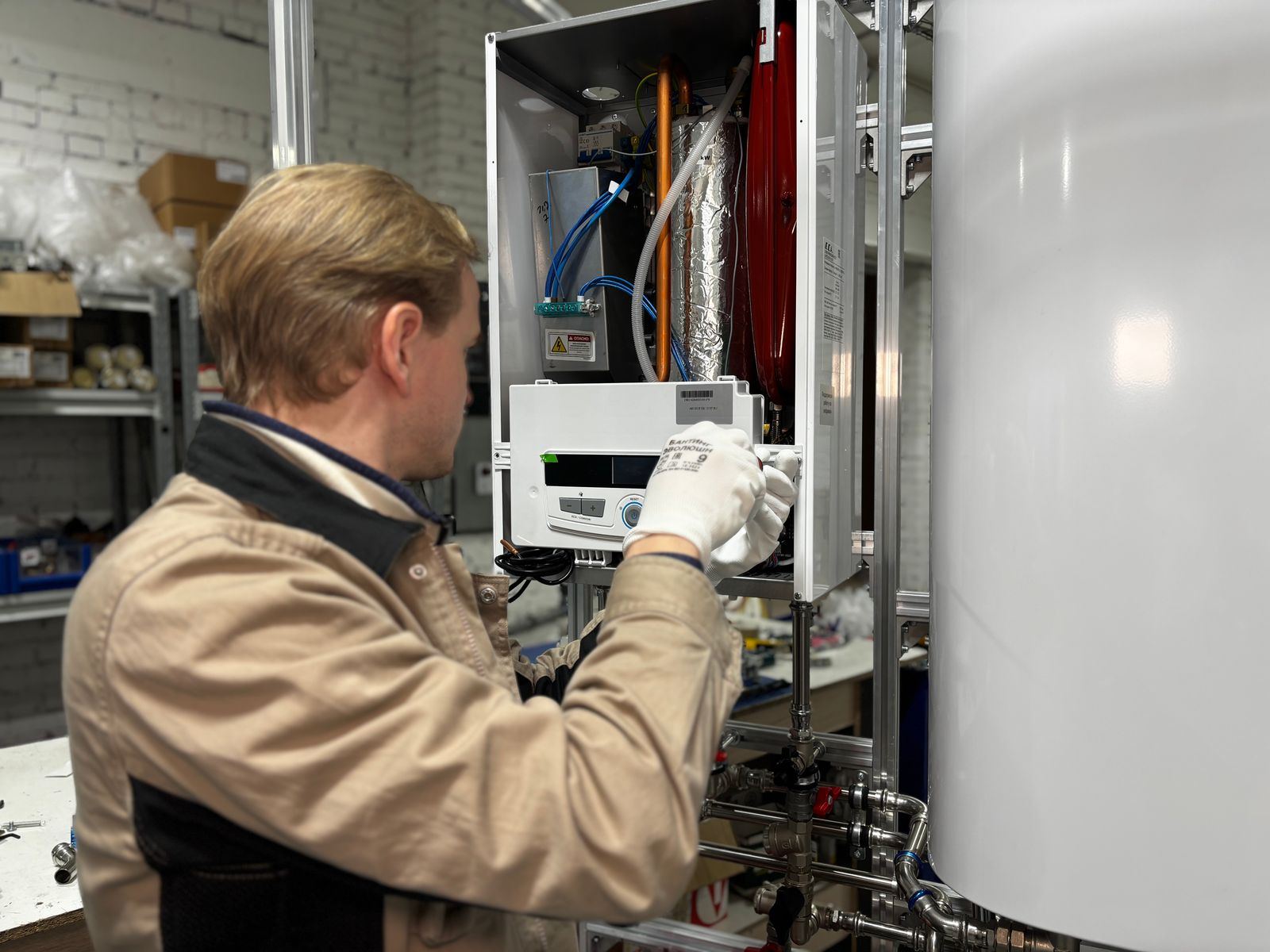
Signs You Need Water Heater Leak Repair in Grand Prairie
Water heaters usually give plenty of warning before they fail, as long as you know what to look and listen for. Keep an eye out for the following:
- Corroded pipe connections or damp flex lines above the heater
- Moisture or mineral crust at the end of the relief valve pipe
- Moisture or rust flakes under the burner access cover
- A drain valve at the bottom of the tank that drips even when closed
- A puddle or damp spot on the floor around the base of the tank
- Higher water use with no obvious explanation
- Warped baseboards or stained drywall beside the water heater
- Brown hot water along with moisture around the tank bottom
Early Action Saves Money
Most water heater failures start small: a popping sound from sediment, a damp spot under the drain valve, or a shower that goes lukewarm a few minutes sooner each week. Don't wait. Get Grand Prairie Water Heater on the phone at (972) 975-6313 and we'll get a technician scheduled.
Talk to Us About Water Heater Leak Repair
One call gets a technician scheduled and a clear price before any work starts.
Call (972) 975-6313 TodayWater Heater Leak Repair FAQ
What a Trained Technician Brings to the Job
The hardest part of leak repair is the diagnosis. Water travels along pipes and the outer jacket before it drips, so the puddle rarely marks the source, and harmless condensation on a gas unit or a cold tank can pass for a leak. Guessing leads to replacing the wrong valve or, worse, missing a tank that is about to fail. The safety side matters as well: a relief valve that is discharging is protecting the tank, and plugging it invites a far worse failure. Old fittings can snap when forced, and water around a 240-volt electric heater is a real shock hazard.
Experience turns a guessing game into a short, clear diagnosis. We isolate each possible source in turn, confirm it with fresh water on a dried surface, and measure static pressure so the fix actually lasts. Worn relief valves, weeping drain valves, and corroded connections are swapped the same visit, and pressure problems get a permanent fix, whether that is an expansion tank or a pressure-reducing valve. A rusted-through tank gets an honest replacement recommendation rather than a patch, and we can add a piped drain pan and a leak sensor to protect your home going forward.
Our Water Heater Leak Repair Process
Good water heater work comes down to a consistent routine, and ours starts with a real diagnosis instead of a guess. Here's what you can expect when you choose Grand Prairie Water Heater:
Stop & Protect
Before diagnosing, we isolate the heater, cut the gas or power, and contain any standing water so floors and walls stop soaking it up.
Trace the Source
We dry the tank and fittings, then check the relief valve and discharge pipe, the drain valve, the top connections, and the burner area one at a time.
Measure What Caused It
We gauge household water pressure and look at expansion control, because a closed system without room to expand spikes pressure every heating cycle.
Fix and Confirm Dry
Repairs are tested, not assumed. We restore water and heat, check each joint, and suggest a drain pan or leak sensor where it would help. If the tank has failed, you get straight replacement options.
Simple Ways to Extend Your Water Heater's Life
A few simple habits, like an annual flush and a quick look at the relief valve, can add years to a tank. Start with these practical measures our team relies on:
- Add a floor sensor or an automatic shutoff valve that closes the supply when it detects water
- Flush the tank once a year so sediment does not overheat the bottom and speed corrosion
- Make a habit of checking around the heater for moisture or corrosion every few weeks
- Install a drain pan piped to a safe spot, which matters most for attic, closet, and upstairs heaters
- Replace a depleted anode rod before the steel tank becomes the next target for corrosion
- An expansion tank that is present and properly charged keeps the relief valve from opening every cycle
- High street pressure is hard on water heaters, so a pressure test and regulator can prevent repeat drips
Doing It Yourself vs. Hiring a Technician
Relighting a pilot by following the label is one thing. Diagnosing a gas valve, a burned-out element, a dirty flame sensor, or a tankless error code calls for meters and know-how that a pro brings. Consider the following comparison:
| Consideration | DIY Attempt | Professional Service |
|---|---|---|
| Diagnosis | Guess based on where water collects | Leak traced to its true starting point |
| Relief Valve | Valve capped to stop the drip, a serious hazard | Valve and pressure both addressed |
| Corroded Connections | Wrapped in tape and hoped for the best | Proper fittings installed and tested |
| Condensation vs Leak | Normal sweating treated as a leak | False leaks ruled out with testing |
| Water Damage | Damage prevention skipped | Drain pan, drain line, and leak sensor options |
| Result | Source unconfirmed | Leak solved and cause corrected |
Talk to Our Water Heater Leak Repair Team
The sooner you call, the sooner the hot water is back. Reach Grand Prairie Water Heater for fast service.
Get Help: (972) 975-6313Water Heater Leak Repair Across the Grand Prairie Area
We serve Grand Prairie and its neighboring towns for water heater leak repair, from quick same-day repairs to planned installs.